
Bali Villa Design: The Architecture, Aesthetics, and Craft Behind the Island’s Most Beautiful Private Residences
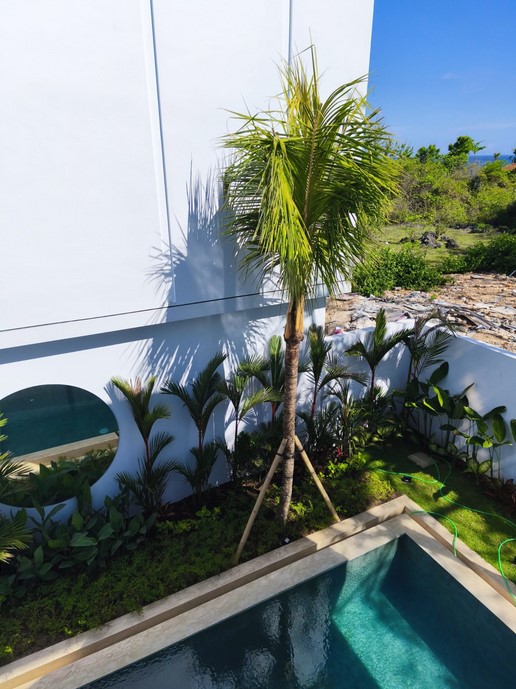
There is something deeply disarming about a well-designed Balinese villa. The moment you step through a carved stone gateway, past a koi pond reflecting the late afternoon light, and into an open pavilion where the tropical breeze moves freely through teak pillars, you understand, almost instinctively, that what surrounds you is not just a building. It’s a philosophy made physical.
Bali has long captivated the world’s most discerning travellers and homeowners. But beyond the lush rice terraces and spiritual temples, the island holds a quieter secret: one of the most sophisticated vernacular architecture traditions in the world, one that is increasingly being reinterpreted by those building private villas for investment, retirement, or a life reimagined under the tropical sun.
This is a space where room design becomes something richer. Where decor is not applied to a surface but grows organically from the culture of the land itself.
The DNA of Balinese Architecture: Why It Feels Different
Walk through any authentic Balinese compound and you’ll notice that the architecture is never experienced as a single building. It’s a collection of interconnected pavilions, each with a specific function, each oriented according to Tri Hita Karana, the Balinese concept of harmony between humans, nature, and the divine.
This philosophy shapes every design decision:
Orientation matters deeply. In traditional Balinese design, the most sacred spaces face the mountain (Kaja), while less sacred areas face the sea (Kelod). Modern villa architects translate this into thoughtful siting, where your master suite sits, where the water flows, where the living pavilion opens toward the light.
The boundary between inside and outside dissolves. There are no walls where a wall isn’t necessary. Living rooms open completely to garden courtyards. Bedrooms look out onto private plunge pools. Bathrooms are designed to bathe under open sky. The architecture acknowledges that in Bali, the outdoor environment is not a threat to be managed but a beauty to be inhabited.
Natural materials are not a stylistic choice, they’re a spiritual one. Paras stone (a soft Balinese limestone), reclaimed teak, alang-alang thatch, black volcanic stone, handwoven bamboo panels, these are the materials that connect a structure to its place. They age beautifully, and they communicate a respect for the island that synthetic alternatives simply cannot replicate.
The Modern Bali Villa: Where Tradition Meets Contemporary Living
Today’s luxury Bali villas exist in a fascinating dialogue between centuries-old design wisdom and the expectations of a global, design-literate clientele. The most successful private residences on the island don’t choose between the two, they choreograph them.
Here’s what that looks like in practice:
The Entry Sequence
Every great Bali villa begins with arrival. A carved candi bentar (split gateway), a reflection pool, a transition through a garden, these aren’t decorative flourishes. They’re psychological preparation. The design intention is to slow you down, to signal that you have left the pace of the world outside and entered a different kind of time.
The Joglo Living Pavilion
Many of the finest villas on the island are built around a central bale or joglo, a traditional pavilion structure characterised by a soaring four-posted roof with dramatic upswept eaves. In modern villa design, these structures house the main living and dining areas, often with no walls at all. The roof becomes the gesture of grandeur; the open sides become the invitation to live in the landscape.
The Pool as Landscape Element
In a Bali villa, the swimming pool is never simply an amenity. It’s a design instrument. Infinity edges that visually merge with the rice field or ocean view beyond. Reflection pools that double the drama of a carved stone wall. Lap pools that run the length of a garden, drawing the eye, and the body, through space. The best villa pools are designed from the inside looking out, not from the outside looking in.
Indoor-Outdoor Bedrooms
The master suite in a well-designed Bali villa is often the most radical room in the building. Folding glass walls that retract completely to merge the sleeping area with a private garden. Outdoor bathrooms with stone soaking tubs under a canopy of frangipani. A daybed on a private terrace where morning coffee becomes a ceremony. These rooms require extraordinary construction precision to function as beautifully as they look.
Designing for the Tropical Climate: What Western Design Rules Don’t Apply
Designing a room, or an entire villa, for Bali’s tropical climate requires letting go of several assumptions that feel instinctive to those trained in European or North American design traditions.
Airflow, not air-conditioning, is the primary cooling strategy. The traditional Balinese pavilion was engineered for cross-ventilation centuries before mechanical cooling existed. High pitched roofs allow hot air to rise and escape. Open sides permit prevailing breezes to move through. Deep overhanging eaves shade walls and openings from the harsh midday sun while allowing cooler morning and evening air to circulate freely.
Humidity demands materials that breathe. Sealed surfaces trap moisture and fail. Stone, untreated timber, woven natural fibres, and lime-washed walls all manage humidity as part of their material character. They don’t resist the tropical environment, they work with it.
Outdoor rooms need to be designed with the same rigour as indoor ones. A covered terrace that floods in the wet season, a pool deck that becomes dangerously slippery, a garden that overgrows into the structure within months, these are the design failures that separate a villa built by someone who understands Bali from one built by someone who has only seen photographs of it.
This is precisely why those investing in a private villa on the island are increasingly seeking out experienced Bali villa contractors who understand not just construction, but the specific environmental, cultural, and regulatory context of building on the island.
The Investment Dimension: Building a Bali Villa That Performs
For many international buyers, a private villa in Bali is not purely a lifestyle purchase, it’s a long-term investment that they expect to perform. And the design decisions made during construction directly determine the property’s rental appeal, maintenance costs, and long-term capital value.
Guest-readiness requires specific design thinking. A villa that will be rented needs more than beauty, it needs function. Multiple ensuite bedrooms with strong blackout capability. A kitchen that can support a villa manager and private chef simultaneously. Fast, reliable internet infrastructure concealed within the structure. Outdoor showers that feel luxurious but are easy to maintain. These aren’t afterthoughts, they need to be designed in from the beginning.
Material selection affects five-year maintenance costs dramatically. Cheap finishes that look acceptable in photographs deteriorate rapidly in Bali’s heat and humidity. A natural paras stone floor that develops a beautiful patina over time is a long-term asset. A poured concrete finish that begins to crack and stain within eighteen months is a liability that compounds. The difference in construction cost is marginal. The difference in ten-year maintenance expenditure is significant.
The value of professional construction oversight cannot be overstated. Bali’s construction industry ranges from exceptional to unreliable. Quality control requires consistent on-site supervision, clear specifications, and a contractor who has the project management infrastructure to maintain standards across every trade. Working with a professional villa construction team in Bali that has a verifiable portfolio of completed projects, transparent processes, and long-term client relationships is the single most important risk-management decision an investor-owner can make.
Signature Design Elements Worth Incorporating in Any Bali Villa
Whether you’re building from scratch or planning a significant renovation, these are the design details that consistently define the most memorable Balinese private residences:
Hand-carved stone detailing. Paras limestone is soft enough to carve intricately and hardens beautifully over time as it weathers. A carved feature wall, a water spout in the shape of a naga (serpent deity), or decorative panels flanking a gateway, these elements are irreplaceable in their authenticity and cannot be simulated with cast concrete substitutes.
Alang-alang thatched roofing. This traditional grass thatch is extraordinarily effective as a roofing material in the tropics, naturally insulating, breathable, and visually spectacular. It requires periodic maintenance but rewards the owner with a living roof that ages into the landscape. Combined with a modern waterproof membrane layer beneath, it performs beautifully for decades.
Reclaimed teak joinery. Antique Javanese teak, sourced from dismantled traditional houses across Java, has a density and character that new-growth timber cannot replicate. Used for structural columns, doors, window frames, and furniture, it brings an irreplaceable sense of history and weight to a space.
The contemplative water feature. Running water, a gentle channel, a lotus pond, a wall-mounted stone spout, does something to a space that no other design element can. It creates acoustic intimacy, masks external noise, and introduces a quality of movement and life that makes static architecture feel inhabited. In Bali, water is also sacred, its presence in a home is never merely decorative.
Open-air bathrooms. Nothing communicates luxury-in-Bali more eloquently than a bathroom designed to bathe under the sky. A sunken tub in a walled garden courtyard, surrounded by tropical planting and lit only by the sun and stars, is an experience that reframes what a bathroom can be. Executed correctly, with thoughtful privacy screening, effective drainage, and materials that age gracefully outdoors, it becomes the most memorable room in the house.
Finding the Right Partner to Build Your Vision
The gap between a villa that looks beautiful on a mood board and one that actually lives up to that vision on completion is almost always attributable to one thing: the quality and expertise of the construction team.
In Bali’s competitive market, there are many contractors offering villa construction services. The differentiators worth scrutinising are portfolio depth (not just the images, but the story behind each project), their understanding of local regulations and permitting requirements, their approach to material sourcing and quality control, and critically, their communication structure throughout the build process.
For those building a private villa for personal use, investment, or both, partnering with an established Bali villa building specialist who brings both technical capability and genuine design literacy to the table is not a luxury, it’s the foundation on which every other decision rests.
Because in Bali, more than almost anywhere else in the world, the space you build becomes the story you tell. And that story deserves to be told well.
This article is part of an ongoing series exploring the intersection of interior design, architecture, and the cultural traditions that shape the world’s most distinctive living spaces.